
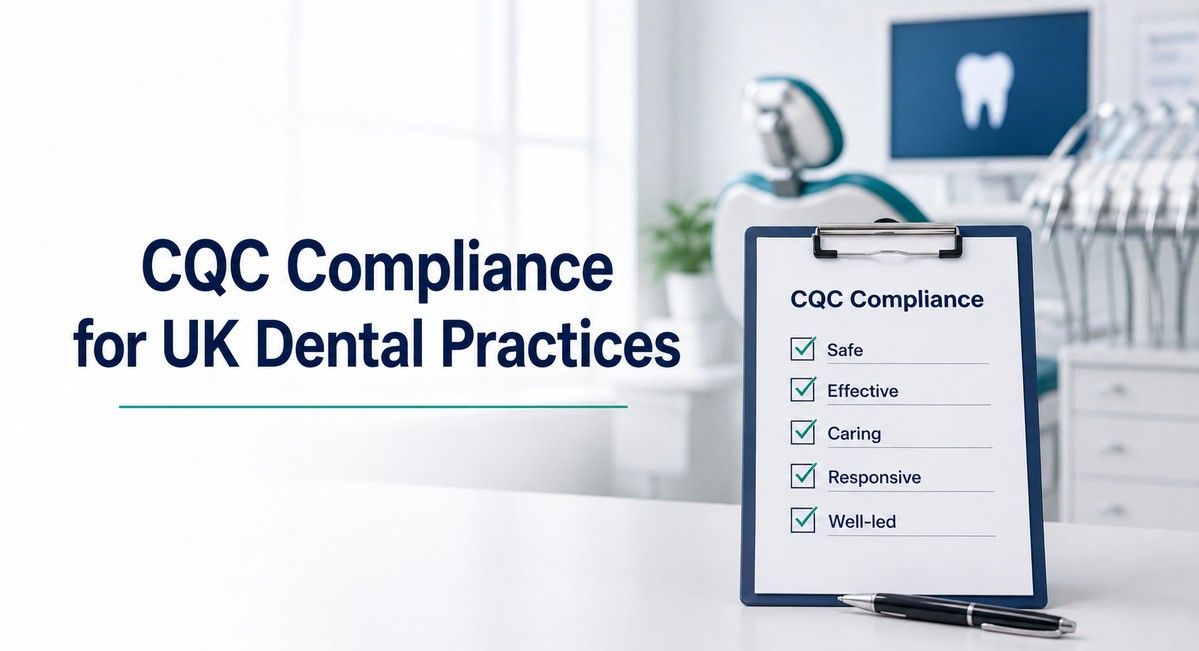
For dental practices in England, CQC compliance is part of providing safe, effective and well-managed care. The Care Quality Commission (CQC) regulates dental services in England and checks whether providers meet relevant legal and quality requirements.
Compliance is not limited to preparing for an inspection. Practices need suitable policies, trained staff, safe systems and evidence that these arrangements are followed and reviewed.
This guide covers the key CQC requirements for dental practices, relevant standards and regulations, inspections and practical ways to maintain compliance.
Understanding CQC Compliance in Dental Practices
CQC compliance means meeting the requirements that apply to a regulated dental service and being able to demonstrate that they are being followed.
CQC registration is only the starting point. Practices must continue to meet their regulatory requirements after registration. This includes maintaining appropriate systems for patient safety, staffing, governance, premises and equipment.
Following CQC guidelines also requires evidence. A policy alone is not enough. Practices should be able to show that staff understand the relevant procedures, training is completed and identified issues are addressed.
What Does CQC Expect From a Dental Practice?
The main CQC requirements cover the systems and processes used to deliver safe and effective dental care.
Safe patient care
Practices should have effective arrangements for infection prevention and control, decontamination, medical emergencies, medicines and risk management.
Emergency equipment and medicines should be available, checked and maintained. Staff should also know their responsibilities during an emergency.
Competent and appropriately staffed teams
Staffing is an important part of patient safety. Practices should verify professional qualifications and registration, and maintain appropriate recruitment records.
Staff should receive role-specific training, including relevant safeguarding, infection control and medical emergency training. Training and competency should be reviewed regularly.
Patient-centred care
Patients should receive care that respects their dignity, individual needs and choices.
Practices should have clear arrangements for consent, communication, confidentiality and complaints. Patient concerns should be recorded, investigated and used to identify improvements where appropriate.
Governance and risk management
Good governance allows a practice to identify risks and monitor the quality of its services.
Relevant activities can include clinical audits, risk assessments, incident reviews, complaints monitoring and action plans.
Premises and equipment
Dental premises and equipment should be suitable, safe and properly maintained.
Practices should keep relevant servicing, maintenance and safety records. Any faults or risks should be identified and addressed promptly.
Staffing and CQC Compliance: What Dental Practices Need to Know
Staffing is an important part of safe and effective dental care. Practices need enough suitably qualified and competent staff to meet patient needs and manage their services safely.
CQC may consider whether staff have the right qualifications, skills, experience and training for their roles. Practices should also maintain appropriate staff records and ensure professional registrations remain current.
Recruiting Qualified Dental Professionals
Dental practices should use suitable recruitment processes when hiring clinical and non-clinical staff. This includes checking qualifications, professional registration, relevant experience and references.
For regulated dental professionals, practices should verify registration with the General Dental Council (GDC) and ensure candidates meet the requirements of the role.
A specialist dental staffing agency can help practices identify suitably qualified candidates and reduce the time spent managing recruitment, particularly when a practice has an urgent or hard-to-fill vacancy.
Understanding the CQC Fundamental Standards
The CQC fundamental standards set the minimum requirements that regulated services must meet.
The standards relevant to dental practices cover areas including:
- Person-centred care
- Dignity and respect
- Consent
- Safe care and treatment
- Safeguarding
- Premises and equipment
- Complaints
- Good governance
- Staffing
- Duty of candour
CQC’s Five Key Questions for Dental Practices
CQC uses five key questions when assessing the quality and safety of services: safe, effective, caring, responsive and well-led.
Safe
CQC considers whether patients are protected from avoidable harm. This includes infection control, safeguarding, medical emergencies, staffing and risk management.
Effective
This considers whether patients receive appropriate care and whether staff have the skills, qualifications and support needed to perform their roles.
Caring
This focuses on how patients are treated. Dignity, respect, communication and involvement in decisions are key considerations.
Responsive
CQC considers whether the practice responds to patients’ needs and concerns, including complaints, accessibility and individual requirements.
Well-led
This looks at leadership, governance and accountability. Practices should have systems for managing risks, monitoring performance and identifying improvements.
Key CQC Regulations Dental Practices Should Know
The CQC regulations provide the legal framework behind many of the requirements discussed above. Dental practices should understand the regulations that relate to their regulated activities and day-to-day operations.
The key regulations include:
- Regulation 9: Person-centred care
- Regulation 10: Dignity and respect
- Regulation 11: Need for consent
- Regulation 12: Safe care and treatment
- Regulation 13: Safeguarding
- Regulation 15: Premises and equipment
- Regulation 16: Receiving and acting on complaints
- Regulation 17: Good governance
- Regulation 18: Staffing
- Regulation 19: Fit and proper persons employed
- Regulation 20: Duty of candour
What Happens During a CQC Dental Inspection?
CQC uses information from different sources to decide when and what to inspect. This can include information from patients, providers, other regulators and partner organisations.
For dental practices, inspections generally assess the service against the five key questions: safe, effective, caring, responsive and well-led. The BDA states that practices usually receive around two weeks’ notice of an inspection.
During an inspection, inspectors may:
- Speak with practice staff
- Review patient records
- Check policies and procedures
- Examine training and recruitment records
- Review audits and risk assessments
- Check infection control arrangements
- Look at premises and equipment
- Consider complaints, incidents and improvements
CQC Inspection Checklist for Dental Practices
A CQC inspection checklist can help practice owners identify gaps before an inspection.
Registration and records
- CQC registration details are accurate
- Statement of Purpose is current
- Required policies are accessible
- Patient records are complete and up to date
Staff
- Professional registrations are current
- Recruitment checks are documented
- Training and CPD records are up to date
- Staff understand their responsibilities
- Competency requirements have been reviewed
Safety
- Infection control procedures are followed
- Decontamination records are available
- Emergency equipment and medicines are checked
- Risk assessments are current
- Equipment maintenance records are available
Governance
- Clinical audits have been completed
- Complaints and incidents are recorded
- Action plans are followed up
- Evidence of improvements is available
Common CQC Compliance Problems in Dental Practices
Many compliance problems arise when a practice has a policy or procedure but cannot demonstrate that it is being followed.
Common gaps include:
- Outdated policies
- Missing staff training records
- Incomplete recruitment checks
- Poorly documented audits
- Inadequate risk assessments
- Incomplete patient records
- Weak infection-control evidence
- Missing equipment maintenance records
- Poorly documented complaints
- Failure to act on identified risks
CQC Compliance Checklist for Ongoing Practice Management
A CQC compliance checklist can be used throughout the year to monitor whether important activities are being completed.
| Frequency | Key checks |
| Monthly | Incidents, complaints, equipment and outstanding actions |
| Quarterly | Audits, selected policies, training and risk assessments |
| Six-monthly | Governance arrangements and staff competency |
| Annually | Full compliance review, policies, training and audit programme |
What Happens If a Practice Isn’t Compliant?
If CQC finds that a dental practice is not meeting the relevant regulations, it requires the practice to take corrective action. Serious or ongoing breaches result in enforcement action, which includes warning notices, conditions on registration, suspension or cancellation of registration.
Some breaches are criminal offences and can result in prosecution. These include certain breaches relating to consent, complaints, good governance and the duty of candour.
Practices should address compliance issues promptly, record the action taken and keep evidence that identified risks have been addressed.
Final Thoughts
Effective CQC compliance is not about preparing a folder of documents before an inspection. Dental practices need working systems, competent staff, accurate records and evidence that risks and problems are addressed.
Regular audits, staff reviews, risk assessments and documented improvements can help practices maintain compliance and remain prepared for inspection throughout the year.
Frequently Asked Questions
What are the CQC fundamental standards?
They are the minimum standards that providers must meet. They cover areas such as safe care, consent, safeguarding, dignity, staffing, governance and premises.
What does CQC check during a dental inspection?
Inspectors may review patient records, staff records, policies, training, audits, risk assessments, infection control, equipment and governance arrangements.
How often are dental practices inspected?
CQC’s dental inspection programme is risk-based. The BDA states that around 10% of practices are selected for a comprehensive inspection each year.
Does CQC give dental practices a rating?
No. Primary dental providers are not rated in the same way as most other CQC-regulated services. CQC uses judgements such as “Regulations met” or “Not all regulations met”.
Can poor staffing affect CQC compliance?
Yes. Practices need enough suitably qualified and competent staff to provide safe care. Where staffing shortages affect patient safety or care quality, practices may consider support from a dental recruitment agency to maintain appropriate workforce levels.